The problem
People don't only search Google any more. They ask ChatGPT, Perplexity or Google's AI answers, and those tools quote some websites and ignore others. Most audit tools still check only for Google, and the good ones are paid.
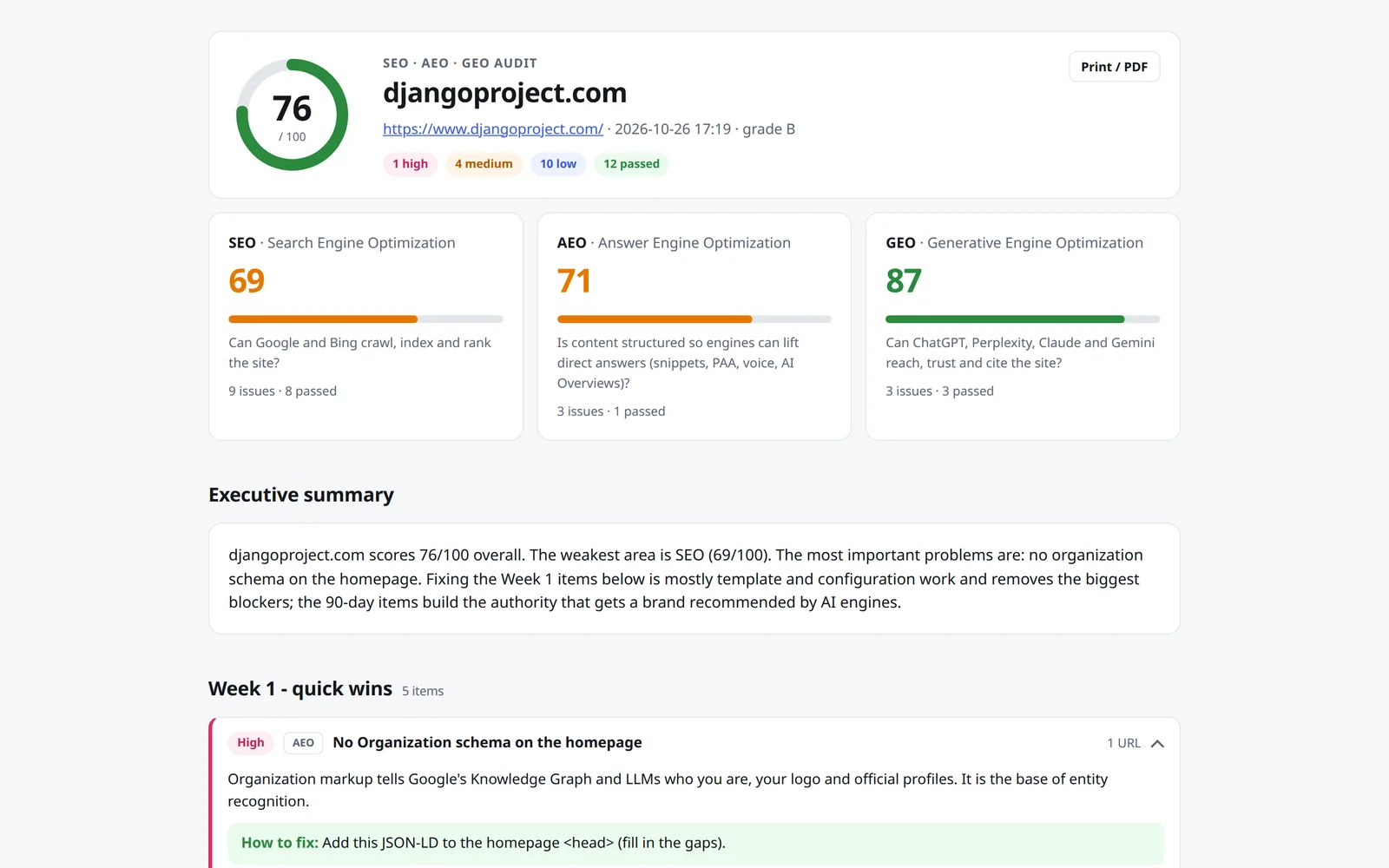
I wanted one free report that covers all three:
- SEO: can Google and Bing find, read and rank the pages?
- AEO (answer engines): is the content structured so a search engine can lift a direct answer from it?
- GEO (AI search): can AI tools reach the site, understand who is behind it, and cite it?
What you get
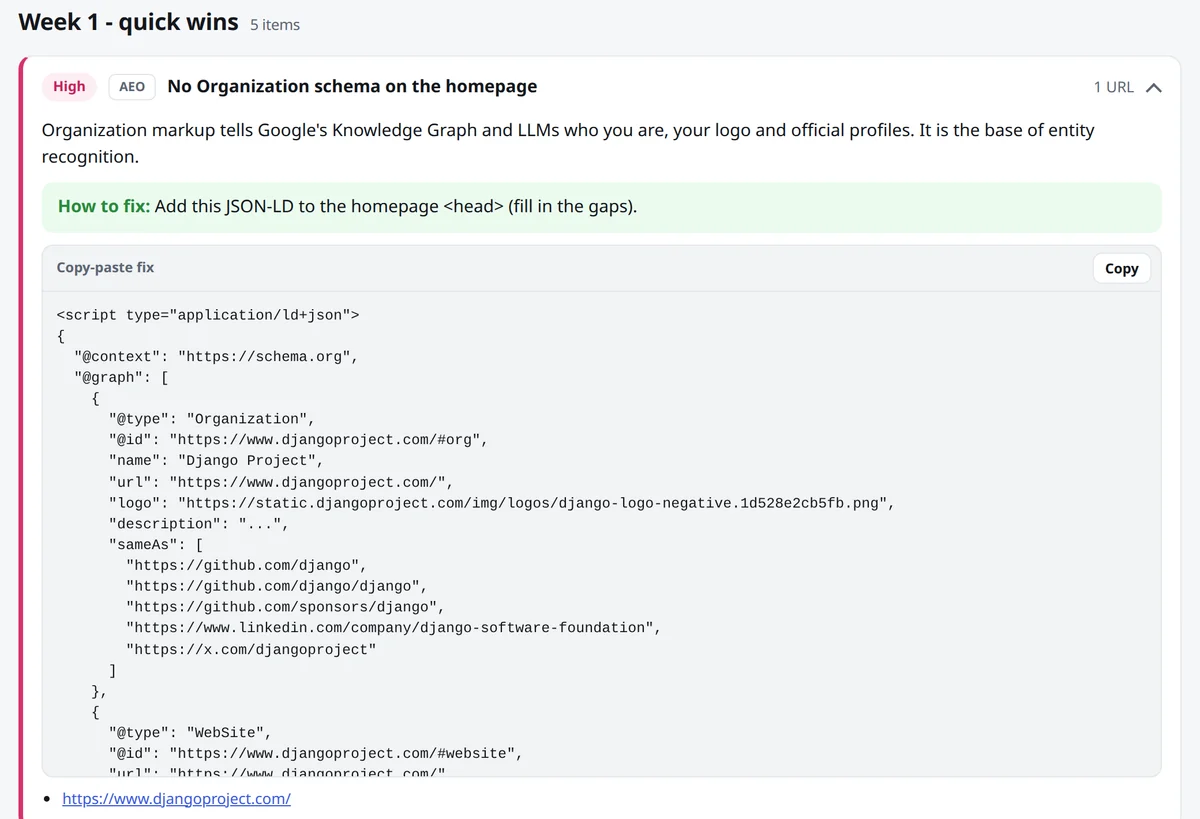
- A plan in three stages: Week 1 quick wins, then 30 days, then 90 days. The biggest, cheapest fixes come first.
- Ready-made code for each fix: structured data (JSON-LD), robots.txt rules and an llms.txt draft.
- The report as a web page, a PDF and a Markdown checklist.
How it works
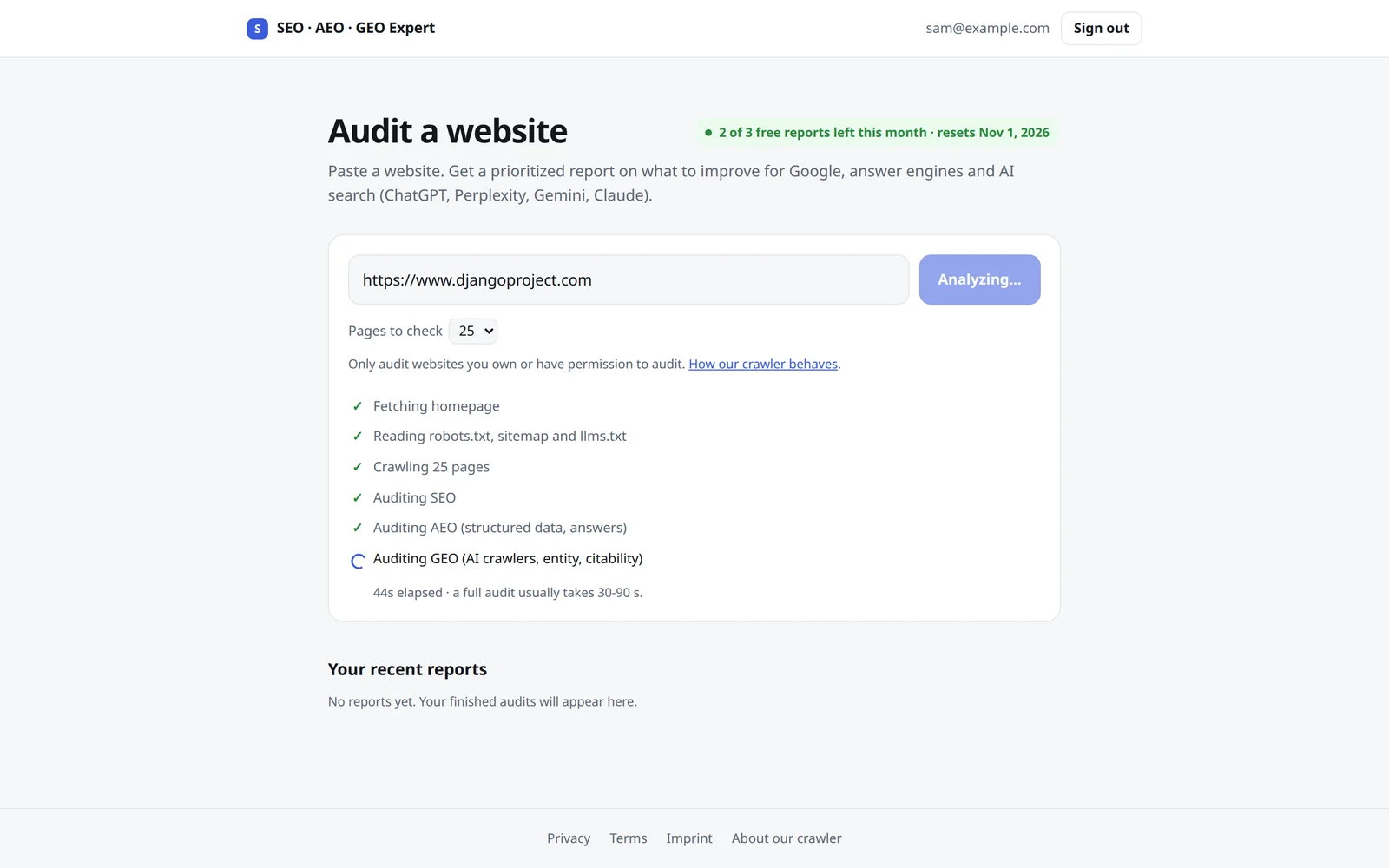
- A Python crawler reads the homepage, robots.txt, the sitemap and up to 25 pages.
- Rule-based checks score each area. Every issue gets a priority and a place in the plan.
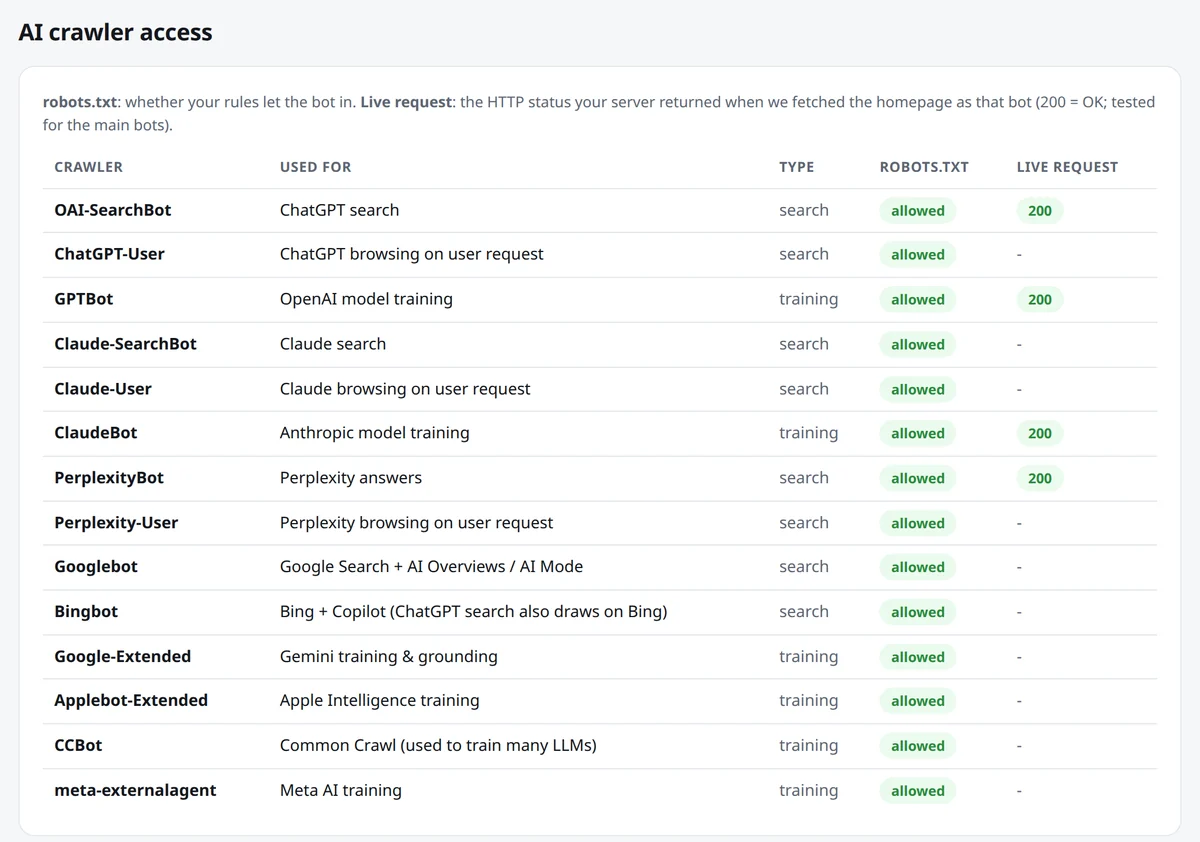
- The app requests the homepage as each of the 14 main AI crawlers, to see whether the server lets it in. A site can allow a bot in robots.txt and still block it at the firewall.
- A template turns the findings into the report, and headless Chromium prints the PDF.
The same pipeline runs from the command line. There, five Claude Code agents can take the findings further: an SEO auditor, an AEO analyst, a GEO analyst, a competitor researcher and a report writer.
Built to be used by strangers
It is written as if strangers will use it, because a tool that takes any address from anyone needs guard rails:
- Sign-in by emailed link. There are no passwords to store or leak.
- Each user has a monthly quota, and sign-in requests are rate-limited.
- The crawler refuses private and internal addresses, and checks again after every redirect. A user can't make the server fetch its own network.
- One site can't be audited over and over in a day, so the crawler stays polite.
- The container runs as a normal user with every Linux capability dropped. Keys live in
.env, outside git. - Automated tests cover parsing, robots rules, the address guard, sign-in, quotas and cross-user isolation. GitHub Actions runs them on every push, against both SQLite and Postgres.
The optional AI test
One more step asks a language model the questions a buyer would ask, and checks whether it names or cites the site. It runs on a free, rate-limited tier, so it's off by default and switched on with one setting.